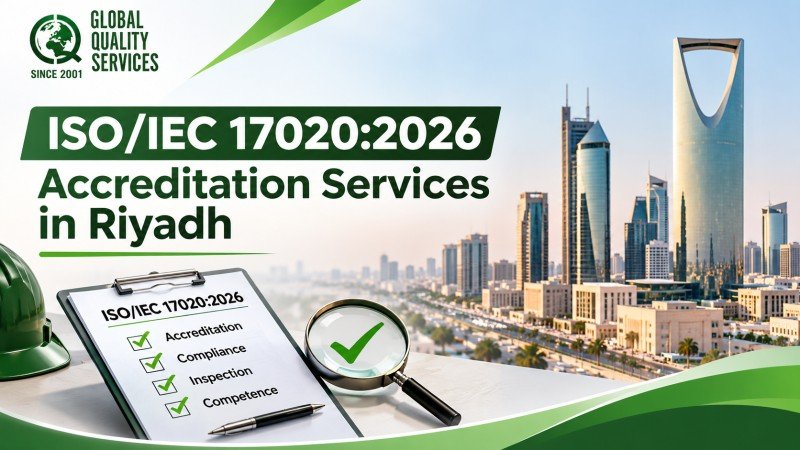
Inspection bodies in Riyadh work across sectors where findings matter, from industrial equipment and construction to vehicles and safety. Saudi Arabia’s inspection system is receiving greater public attention: Saudi Gazette reported that the National Center for Inspection and Monitoring had received more than 11 million reports through its unified platform.
ISO/IEC 17020:2026 sets requirements for inspection bodies to demonstrate competence, impartiality, and consistent operations. Accreditation can strengthen confidence in inspection results. A consultant can help your team interpret the revised standard, identify gaps, prepare documents, and get ready for assessment.
What is ISO/IEC 17020:2026 Accreditation
ISO/IEC 17020:2026 is an international standard that specifies requirements for bodies performing inspection activities. It focuses on three important areas: technical competence, impartiality, and consistent operations.
An inspection body examines products, materials, equipment, installations, processes, services, or facilities. It then determines whether the inspected item meets specified requirements. These requirements may come from regulations, technical standards, contracts, or customer specifications.
For example, an inspection body in Riyadh may examine industrial equipment, building systems, vehicles, lifting equipment, or infrastructure. Its inspectors must follow suitable methods, use appropriate equipment, and report their findings accurately.
ISO/IEC 17020:2026 gives inspection bodies requirements for managing these activities. Accreditation against this standard allows an independent accreditation body to assess whether the inspection body meets the applicable requirements within its approved scope.
It is important to understand the difference between accreditation and certification. An inspection body seeks accreditation, not ordinary ISO management system certification. The accreditation body assesses its competence and authorises the relevant inspection scope.
Who Needs ISO/IEC 17020:2026 Accreditation in Riyadh?
Organizations that perform inspection activities can consider ISO/IEC 17020:2026 accreditation. The exact scope depends on the services they offer and the requirements of their clients or regulators.
In Riyadh, relevant inspection activities may include:
1. Industrial Inspection Bodies
Companies that inspect industrial equipment, machinery, pressure systems, and production facilities can use the standard to demonstrate their inspection competence.
2. Construction and Building Inspection Companies
Inspection bodies that examine buildings, structural components, construction work, and building systems can seek accreditation for their relevant inspection activities.
3. Vehicle and Equipment Inspection Providers
Organizations that inspect vehicles, trucks, lifting equipment, and other machinery can use ISO/IEC 17020 requirements to strengthen inspection consistency and reporting.
4. Environmental Inspection Bodies
Companies that conduct environmental inspections can seek accreditation for relevant activities within their technical scope.
5. Safety Inspection Providers
Inspection bodies that assess workplace equipment, safety systems, installations, and other safety-related requirements can use the standard to demonstrate their competence.
6. Food and Product Inspection Bodies
Organizations that inspect food products, materials, consumer goods, or other products can pursue accreditation for the specific inspection activities they perform.
The Saudi Accreditation Center (SAAC) lists several inspection accreditation areas, including equipment, the Saudi Building Code, industrial facilities, roads, vehicles, safety, environment, food and drugs, and logistics services. This makes it a useful reference for inspection bodies planning their accreditation scope in Saudi Arabia.
Why is ISO/IEC 17020:2026 Accreditation Important
Inspection results influence business decisions, regulatory approvals, and operational safety. A weak inspection process can lead to incorrect reports, overlooked defects, and disputes with customers.
Accreditation gives clients and other stakeholders independent evidence that an inspection body meets defined competence and impartiality requirements.
Here are some reasons why inspection bodies in Riyadh pursue ISO/IEC 17020:2026 accreditation.
1. Demonstrate Technical Competence
Inspection bodies must show that their personnel understand the inspection methods, technical requirements, and equipment relevant to their assigned work. Accreditation assesses whether the organization has the necessary competence to perform its approved inspection activities.
2. Strengthen Impartiality
Clients expect inspectors to make decisions based on evidence, not commercial pressure or personal interests. The standard requires inspection bodies to identify and manage risks that could affect impartiality.
3. Improve Inspection Consistency
Different inspectors should follow approved methods when they perform the same type of inspection. Documented procedures, supervision, and performance monitoring help organizations maintain consistent results.
4. Build Customer Confidence
Customers want reliable inspection reports before they approve equipment, accept products, or proceed with projects. Accreditation gives them independent evidence that the inspection body meets the applicable requirements.
5. Support Regulatory and Contractual Requirements
Certain customers, authorities, and contracts may require inspection services from an accredited body. Accreditation can help organizations demonstrate that they meet the relevant technical and operational expectations.
6. Improve Risk Management
A structured inspection process helps organizations identify defects, equipment issues, and nonconformities. Clear inspection records also help customers make informed decisions about corrective actions.
7. Strengthen Market Credibility
Accreditation can help an inspection body demonstrate its competence when competing for contracts or working with new customers. Its value depends on the accreditation scope and whether the relevant customers recognize the accreditation.
What Does ISO/IEC 17020:2026 Require?
Inspection bodies must address several requirements before they apply for accreditation. The exact evidence depends on the type of inspection, the scope, and the organization’s structure.
Key areas include:
Impartiality and Independence
The inspection body must identify relationships or commercial interests that could influence inspection decisions. It must assess these risks and take suitable action.
Confidentiality
Inspection bodies handle customer information, inspection records, technical data, and other sensitive details. They must control access and protect confidential information.
Organizational Structure
The organization must define responsibilities, reporting lines, and authority for inspection activities. It must also establish arrangements that support independent and reliable decisions.
Personnel Competence
Inspectors must have the knowledge, skills, qualifications, and experience required for their assigned activities. The inspection body must define competence criteria and monitor personnel performance.
Inspection Methods and Procedures
The organization must use suitable inspection methods and maintain documented procedures. Inspectors must understand how to apply these methods and record their results.
Equipment and Facilities
Inspection bodies must use appropriate equipment for their activities. They must maintain, calibrate, or verify equipment as required and retain relevant records.
Inspection Records and Reports
The organization must maintain accurate inspection records and issue clear reports. These reports should identify the inspected item, inspection method, results, and other required information.
Complaints and Appeals
The inspection body must establish a process to receive, review, and resolve complaints and appeals. It should also maintain records of the actions taken.
Management System and Internal Audits
The organization must maintain a management system that supports consistent operations. Internal audits and management reviews help it check performance and address weaknesses.
Key Changes in ISO/IEC 17020:2026
The 2026 edition introduces important updates that inspection bodies should review before applying for accreditation or transitioning from the previous edition.
1. Revised Independence Classification
The previous edition used Type A, Type B, and Type C classifications. The 2026 edition simplifies this model into Type A and Non-Type A categories.
Inspection bodies should review their ownership, organizational relationships, and involvement in the items they inspect. They must determine which classification applies to their operations.
2. Stronger Focus on Risk-Based Thinking
The revised requirements place greater emphasis on identifying and managing risks that could affect inspection activities. Organizations should review their approach to impartiality, competence, and operational controls.
3. Updated Personnel Requirements
Inspection bodies should review how they define personnel competence, assign responsibilities, supervise inspectors, and monitor performance.
4. Greater Attention to Data and Information Control
Organizations should review how they manage inspection information, records, and data. Their controls must protect information and support reliable inspection reporting.
5. Updated Operational Requirements
The revision also updates requirements related to inspection processes, complaints, appeals, and the consistent operation of inspection bodies.
Step-by-Step Process to Get ISO/IEC 17020:2026 Accreditation
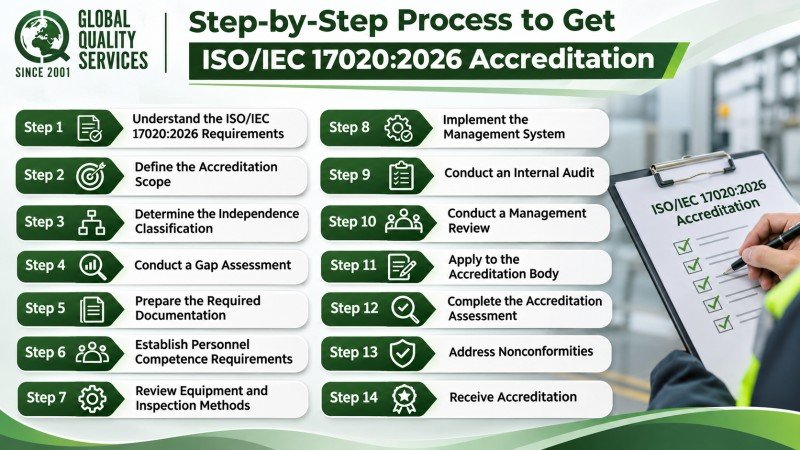
Preparing for accreditation requires coordination between management, technical personnel, inspectors, and support teams. The following steps explain how an inspection body can prepare.
Step 1: Understand the ISO/IEC 17020:2026 Requirements
Start by reviewing the latest standard and understanding its requirements. Identify the clauses that apply to your inspection activities, organizational structure, and proposed accreditation scope.
Step 2: Define the Accreditation Scope
List the inspection services your organization wants to include. Identify the inspection methods, locations, technical areas, and activities that fall within the proposed scope.
Step 3: Determine the Independence Classification
Review your organization’s structure and relationships with the items it inspects. Determine whether Type A or Non-Type A requirements apply under the revised standard.
Step 4: Conduct a Gap Assessment
Compare your current inspection practices with the requirements of ISO/IEC 17020:2026. Review personnel competence, impartiality controls, equipment, inspection methods, and documentation.
Step 5: Prepare the Required Documentation
Develop or update the policies, procedures, forms, and records needed for your inspection activities. Make sure your documents reflect actual operations rather than simply copying standard requirements.
Step 6: Establish Personnel Competence Requirements
Define the qualifications, training, experience, and technical knowledge required for each inspection role. Maintain competence records and establish suitable supervision and performance monitoring.
Step 7: Review Equipment and Inspection Methods
Check whether your organization uses suitable equipment and approved inspection methods. Maintain equipment records and confirm that calibration or verification arrangements meet applicable requirements.
Step 8: Implement the Management System
Put the approved procedures into practice. Train employees, assign responsibilities, control inspection records, and apply the required operational controls across the accreditation scope.
Step 9: Conduct an Internal Audit
Review whether employees follow the documented procedures and whether the system meets the standard’s requirements. Record nonconformities and take corrective action.
Step 10: Conduct a Management Review
Management should review audit results, customer feedback, complaints, inspection performance, resource needs, and opportunities for improvement. Record decisions and follow-up actions.
Step 11: Apply to the Accreditation Body
Submit your application and supporting documents to the relevant accreditation body. In Saudi Arabia, inspection bodies can refer to the Saudi Accreditation Center (SAAC) for its application process and applicable requirements.
Step 12: Complete the Accreditation Assessment
The accreditation body reviews your documentation and assesses your inspection body against the standard. The assessment may include office evaluations, technical reviews, and witnessing of inspection activities, depending on the scope.
Step 13: Address Nonconformities
If assessors identify nonconformities, review each finding and determine its cause. Implement corrective actions and submit the required evidence for review.
Step 14: Receive Accreditation
After the accreditation body completes its evaluation and accepts the corrective actions, it makes an accreditation decision. If successful, it grants accreditation for the approved inspection scope.
Benefits of ISO/IEC 17020:2026 Accreditation
Accreditation can support an inspection body’s reputation, technical operations, and customer relationships. It also encourages the organization to review how it performs and reports inspections.
Some important benefits include:
- Independent Recognition: Demonstrate that an accreditation body has assessed your inspection competence and impartiality.
- Reliable Inspection Reports: Follow consistent methods and maintain clear records of inspection results.
- Improved Personnel Competence: Define technical requirements for inspectors and monitor their performance.
- Better Customer Confidence: Give clients independent evidence of your inspection body’s capabilities.
- Stronger Impartiality Controls: Identify and manage relationships that could influence inspection decisions.
- Improved Operational Control: Maintain clear procedures for inspections, equipment, records, complaints, and appeals.
- Support for Business Opportunities: Meet accreditation requirements specified by relevant customers, contracts, or authorities.
- Continual Improvement: Use internal audits, management reviews, and corrective actions to improve inspection activities.
Why Choose Global Quality Services for ISO/IEC 17020:2026 Accreditation in Riyadh?
Preparing for ISO/IEC 17020:2026 accreditation requires a clear understanding of inspection activities and the evidence an accreditation body expects. Inspection bodies must also address the revised independence classification and review their existing procedures.
Global Quality Services supports inspection organizations through the preparation stage. Our consultants work with your team to understand the proposed accreditation scope, identify gaps, and prepare the required documentation.
Practical Guidance on the Revised Standard
Our team helps you understand the requirements of ISO/IEC 17020:2026 and identify the changes that affect your inspection activities.
Support with Accreditation Scope
We help you review your inspection services and define a suitable scope for your accreditation application.
Gap Assessment and Documentation
We assess your current practices and support the preparation or revision of relevant procedures, forms, and records.
Personnel and Technical Requirements
We help you review competence criteria, responsibilities, training records, inspection methods, and equipment controls.
Internal Audit and Management Review Support
We guide your team through internal audit preparation and management review requirements before the external assessment.
Accreditation Assessment Preparation
We help organize your documents and evidence, so your team can respond to assessment requirements with greater clarity.
Global Quality Services provides consulting and preparation support. The Saudi Accreditation Center or another applicable accreditation body independently evaluates the inspection body and makes the accreditation decision.
Speak with Global Quality Services for ISO/IEC 17020:2026 Accreditation in Riyadh
Planning to apply for ISO/IEC 17020:2026 Accreditation in Riyadh? Global Quality Services can help you review the revised requirements, define your accreditation scope, assess existing procedures, and prepare the necessary documentation. Our consultants work with your team to identify gaps and prepare for the independent assessment. Contact Global Quality Services to discuss your inspection activities and plan your accreditation journey.
Frequently Asked Questions
1. Is ISO/IEC 17020:2026 applicable to third-party inspection bodies only?
No. The standard covers inspection bodies with different independence arrangements. The applicable classification depends on the organization’s relationships and involvement in the items it inspects.
2. What is the difference between Type A and Non-Type A inspection bodies?
Type A inspection bodies operate with the independence required for third-party inspection. Non-Type A bodies have different organizational relationships or involvement with the items they inspect, as defined by the 2026 standard.
3. Can an inspection body apply for accreditation for multiple inspection activities?
Yes. An inspection body can apply for multiple activities if it demonstrates competence, suitable methods, and the required resources for each activity within its proposed scope.
4. Does ISO/IEC 17020:2026 accreditation cover all inspection services automatically?
No. Accreditation applies only to the activities listed in the approved scope. An inspection body must demonstrate competence for each inspection activity it wants to include.
5. Who grants ISO/IEC 17020:2026 accreditation in Saudi Arabia?
The Saudi Accreditation Center (SAAC) offers accreditation services for inspection bodies in Saudi Arabia. It evaluates applications and assesses technical and managerial competence against the applicable requirements.
6. What happens if an inspection body does not meet the accreditation requirements?
The assessment team may identify nonconformities. The inspection body must address these findings and submit suitable corrective action evidence before the accreditation body makes its final decision.
7. Can an inspection body accredited to ISO/IEC 17020:2012 transition to the 2026 edition?
Yes. Accredited inspection bodies must review the revised requirements and complete the transition within the applicable deadline. ISO published the 2026 edition on 27 March 2026, with a three-year transition period ending on 27 March 2029.
8. Does Global Quality Services issue ISO/IEC 17020:2026 accreditation?
No. Global Quality Services offers consulting and accreditation preparation support. An authorized accreditation body independently assesses the inspection body and grants accreditation if it meets the applicable requirements.