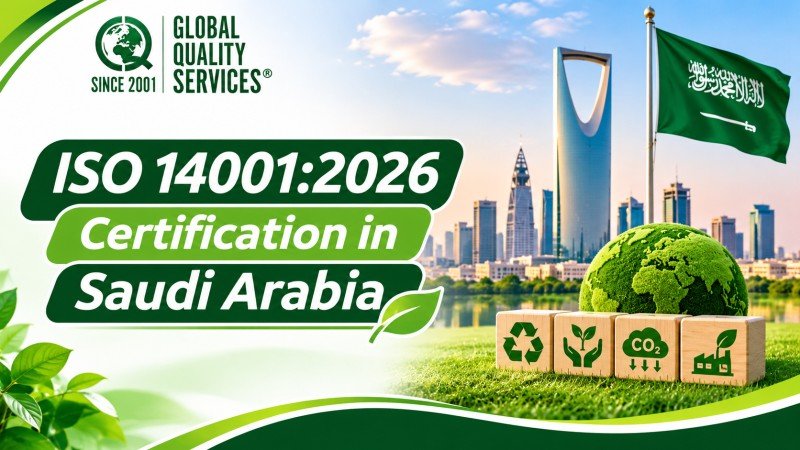
Saudi Arabia’s growing focus on environmental sustainability is putting greater attention on how businesses manage waste, resources, and emissions. The Saudi Press Agency reported that the Kingdom diverted 18% of its waste from disposal in 2025, reflecting ongoing efforts to improve resource use.
For companies across manufacturing, construction, energy, and logistics, ISO 14001:2026 offers a practical way to manage environmental impacts and meet relevant obligations. A consultant can help interpret the updated requirements, identify gaps, and prepare your team for the independent certification audit while strengthening environmental performance over time.
What is ISO 14001:2026 Certification
ISO 14001:2026 is an international standard for Environmental Management Systems (EMS). It sets requirements for organizations that want to manage their environmental responsibilities through a structured management system.
The standard helps businesses identify how their activities, products, and services affect the environment. They can then assess significant environmental aspects, understand applicable legal obligations, set improvement objectives, and monitor their performance
The 2026 edition is the fourth edition of ISO 14001. It replaces ISO 14001:2015 and incorporates the climate change considerations introduced through the 2024 amendment. The updated edition also clarifies requirements around risks and opportunities, planning changes, management reviews, and documented information.
ISO 14001:2026 applies to organizations of different sizes and sectors. A manufacturing plant can use it to manage emissions, wastewater, and production waste. A logistics company can address fuel consumption, vehicle emissions, and packaging waste. An office-based business can focus on energy use, paper consumption, and waste management.
Certification involves an independent certification body assessing your Environmental Management System against the standard. It confirms that your organization meets the applicable requirements within the scope stated on the certificate. It does not mean that your business has zero environmental impact.
Why Is ISO 14001:2026 Certification Important in Saudi Arabia?
Saudi businesses operate across sectors where environmental responsibilities matter. Manufacturing, construction, energy, logistics, and infrastructure projects all involve environmental considerations. Companies must understand these impacts and manage them through suitable operational controls.
ISO 14001:2026 gives businesses a consistent way to address these responsibilities. Here is why organizations in Saudi Arabia should consider certification.
1. Manage Environmental Responsibilities
Business activities can affect air quality, water resources, land, and surrounding communities. ISO 14001 helps organizations identify these environmental aspects and decide which ones need greater attention. Companies can then establish controls that address their actual operations.
2. Address Environmental Compliance Obligations
Organizations must identify the environmental laws, permits, and other obligations that apply to their activities. An Environmental Management System gives teams a structured way to track these requirements and evaluate compliance. This also helps management identify areas that need corrective action.
3. Improve Resource Efficiency
Energy, water, raw materials, and fuel all affect operating costs. ISO 14001 encourages businesses to monitor resource consumption and set measurable improvement objectives. Better planning can help reduce unnecessary consumption and avoid material waste.
4. Meet Customer and Supply Chain Expectations
Large buyers, project owners, and business partners may ask suppliers about their environmental management practices. ISO 14001 certification gives organizations independent evidence that they manage environmental responsibilities through a recognized system. This can strengthen their position when responding to supplier assessments and tenders.
5. Prepare for Environmental Risks
Extreme weather, resource shortages, pollution incidents, and operational changes can affect business activities. ISO 14001:2026 encourages organizations to consider relevant environmental conditions, risks, and opportunities. Businesses can use this assessment to plan suitable actions and improve their response.
Step-by-Step Process to Get ISO 14001:2026 Certification in Saudi Arabia
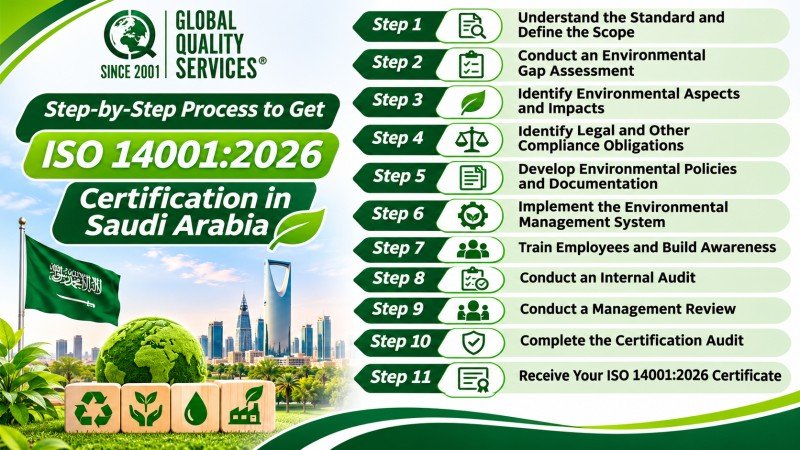
Getting ISO 14001:2026 certified requires planning and participation from different departments. Your team must understand the standard, establish the Environmental Management System, and demonstrate that it works in practice.
Follow these steps to prepare for certification.
Step 1: Understand the Standard and Define the Scope
Start by reviewing ISO 14001:2026 requirements and identifying the activities that your Environmental Management System will cover. Define the relevant locations, departments, products, and services. A clear scope helps your team understand which operations the certification audit will assess.
Step 2: Conduct an Environmental Gap Assessment
Review your existing environmental practices against ISO 14001:2026 requirements. Identify gaps in policies, operational controls, legal compliance records, environmental objectives, and monitoring activities. This assessment gives your team a clear list of actions to complete before the certification audit.
Step 3: Identify Environmental Aspects and Impacts
Examine how your business activities interact with the environment. Consider energy use, water consumption, emissions, waste generation, chemical handling, and other relevant activities. Assess their potential impacts and determine which environmental aspects require operational controls.
Step 4: Identify Legal and Other Compliance Obligations
List the environmental laws, regulations, permits, customer requirements, and other obligations relevant to your operations in Saudi Arabia. Assign responsibility for tracking these requirements. Your team should also establish a process to evaluate compliance and retain suitable evidence.
Step 5: Develop Environmental Policies and Documentation
Prepare an environmental policy that reflects your organization’s activities and commitments. Develop procedures, objectives, operational controls, monitoring records, and other documented information required by the standard. Keep the documents practical so employees can use them during daily work.
Step 6: Implement the Environmental Management System
Put the approved procedures and controls into practice. Assign responsibilities to relevant departments and communicate the requirements to employees. Your organization should also address outsourced activities and emergency situations that could affect environmental performance.
Step 7: Train Employees and Build Awareness
Employees need to understand how their work affects the environment. Conduct training based on their roles and responsibilities. Explain waste handling, resource conservation, emergency procedures, and relevant operational controls. Keep attendance records and evaluate whether employees understand the requirements.
Step 8: Conduct an Internal Audit
Review the Environmental Management System to check whether it meets ISO 14001:2026 requirements and follows your organization’s procedures. Internal auditors should examine records, interview employees, and check operational controls. Record nonconformities and assign corrective actions to the responsible teams.
Step 9: Conduct a Management Review
Senior management must review the Environmental Management System and its performance. Discuss audit results, compliance status, environmental objectives, monitoring data, risks, opportunities, and improvement needs. Record decisions and assign actions with clear responsibilities.
Step 10: Complete the Certification Audit
Select an independent certification body that can assess your Environmental Management System. The audit generally includes Stage 1, which reviews system documentation and readiness, followed by Stage 2, which evaluates implementation and operational effectiveness. Address any nonconformities raised by the auditors.
Step 11: Receive Your ISO 14001:2026 Certificate
Once the certification body confirms that your system meets the standard’s requirements and closes applicable findings, it can make the certification decision and issue the certificate. Review the certificate details, including the organization name, certified locations, scope, standard edition, and validity dates.
Benefits of ISO 14001:2026 Certification
ISO 14001:2026 certification can support environmental and business improvements when your organization actively maintains its management system.
Some important benefits include:
- Better environmental performance: Track significant environmental impacts and work towards measurable improvements.
- Improved resource management: Monitor energy, water, fuel, and material consumption to identify avoidable waste.
- Stronger compliance management: Keep environmental obligations, permits, and compliance evaluations organized.
- Better operational control: Establish consistent procedures for activities that can affect the environment.
- Greater customer confidence: Give clients and business partners independent evidence of your environmental management practices.
- Improved risk awareness: Identify environmental risks and opportunities before they affect business operations.
- Clearer employee responsibilities: Help teams understand their role in managing environmental impacts.
- Support for sustainability goals: Connect environmental objectives with business planning and performance reviews.
Why Choose Global Quality Services for ISO 14001:2026 Certification in Saudi Arabia?
Preparing for ISO 14001:2026 certification can involve several departments, operational records, and environmental compliance requirements. Working with an experienced consultant can make the preparation process clearer and more manageable.
Global Quality Services supports businesses through the key stages of ISO 14001:2026 certification preparation. Our team can help you understand the standard, review existing environmental practices, identify gaps, and develop the documentation your Environmental Management System needs.
We also guide your team on implementation, employee awareness, internal audits, and management reviews. This support helps your organization prepare for the independent certification audit with a clearer understanding of its responsibilities.
Whether you operate in manufacturing, construction, logistics, energy, or another sector, Global Quality Services can help you plan your certification journey around your business activities.
Speak with Global Quality Services for ISO 14001:2026 Certification
Looking to achieve ISO 14001:2026 Certification for your business in Saudi Arabia? Partner with Global Quality Services for practical guidance throughout your certification journey. Our team can help you understand the updated requirements, identify gaps, prepare documentation, and get ready for the independent audit. Contact Global Quality Services today to discuss your environmental management goals and take the next step towards certification.
Frequently Asked Questions
1. Can a company certify multiple branches under one ISO 14001:2026 certificate?
Yes. A company may include multiple locations under one certificate when the certification body accepts the proposed scope and sampling arrangements. Each location must fall within the defined Environmental Management System and meet applicable requirements.
2. Does ISO 14001:2026 certification cover suppliers and contractors?
The certificate covers the organization’s defined management system, not every supplier independently. However, the organization must address relevant outsourced activities, procurement controls, and environmental requirements for external providers where these can affect its environmental performance.
3. Can a business integrate ISO 14001:2026 with ISO 9001 or ISO 45001?
Yes. Organizations can integrate their Environmental Management System with quality and occupational health and safety management systems. The standards share a common management system structure, which can help businesses coordinate audits, documentation, responsibilities, and management reviews.
4. Does ISO 14001:2026 certification guarantee that a company will avoid environmental penalties?
No. Certification does not provide immunity from regulatory action or replace environmental permits. Organizations must continue to meet applicable legal obligations, monitor compliance, and address any violations or environmental incidents.
5. What happens if an organization changes its operations after certification?
The organization should assess changes that may affect its Environmental Management System. It must plan and manage relevant changes, review new environmental aspects and risks, and update controls or documentation where necessary. The certification body may also need to assess significant changes to the certified scope.