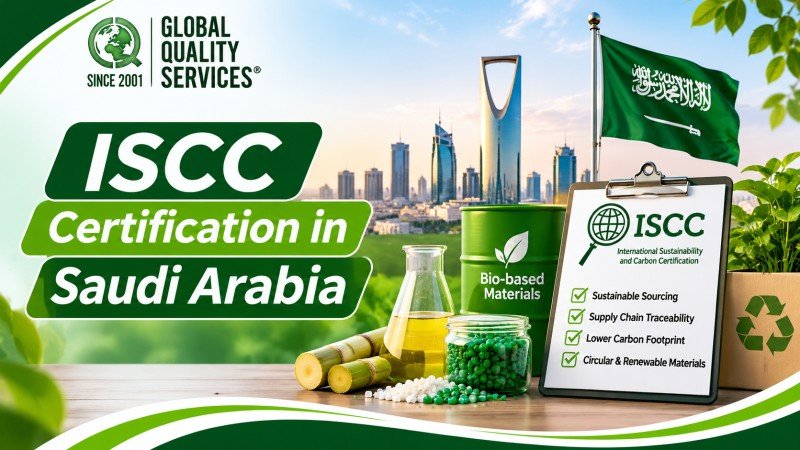
Saudi Arabia is expanding its recycling sector and creating opportunities for businesses that handle renewable, recycled, and bio-based materials. A February 2026 report by Waste & Recycling Middle East stated that the Kingdom aims to attract SAR 40 billion in recycling investments and recover 4.2 million tonnes of recyclable materials by 2035.
ISCC Certification helps companies demonstrate responsible sourcing, material traceability, and supply chain sustainability. The scheme depends on products and markets. A consultant can help you select the suitable scheme, prepare records, and approach the independent audit with confidence.
What is ISCC Certification
ISCC stands for International Sustainability and Carbon Certification. It is a certification system that supports sustainable, traceable, and responsible supply chains across different industries.
The system covers several areas, including sustainable raw material sourcing, land-use protection, greenhouse gas emissions, traceability, and chain of custody. It applies to different materials and supply chains, depending on the selected certification scheme.
Businesses in Saudi Arabia can explore ISCC certification if they work with renewable fuels, agricultural materials, bio-based products, recycled feedstocks, chemicals, plastics, packaging, or other eligible materials.
ISCC offers different schemes for different markets and business activities:
- ISCC EU: Supports compliance with European Union sustainability and greenhouse gas requirements for renewable fuels and biomass used for energy.
- ISCC PLUS: Covers bio-based, circular, and renewable raw materials across global markets. It supports companies that want to demonstrate the sustainability characteristics of their products and supply chains.
- ISCC CORSIA: Supports sustainable aviation fuel supply chains under the Carbon Offsetting and Reduction Scheme for International Aviation.
- ISCC Carbon Footprint Certification (CFC): Focuses on verifying the carbon footprint of products and supply chains.
Your business must select the scheme that matches its materials, operations, and intended market. A company targeting the European renewable fuel market may need ISCC EU, while a manufacturer handling circular or bio-based plastics may consider ISCC PLUS.
Why is ISCC Certification Important in Saudi Arabia?
Businesses in Saudi Arabia increasingly work with international suppliers, manufacturers, distributors, and customers. Many of these partners ask companies to demonstrate where their materials come from and how they manage sustainability across their operations.
ISCC Certification gives businesses a structured way to address these expectations. It also helps them maintain records and trace materials throughout their supply chains.
Here are some reasons why companies consider ISCC Certification:
1. Meet Customer Sustainability Requirements
International buyers may ask suppliers to demonstrate responsible sourcing and material traceability. ISCC certification gives businesses a recognised way to document relevant sustainability practices.
2. Improve Supply Chain Transparency
Companies must track materials from their source through processing, storage, and delivery. ISCC requirements encourage accurate records and traceability at relevant points in the supply chain.
3. Support Access to International Markets
Some customers and markets require specific sustainability evidence. The appropriate ISCC scheme can help eligible businesses demonstrate compliance with relevant market requirements.
4. Track Recycled and Renewable Materials
Manufacturers that use recycled, circular, or renewable feedstocks need reliable records of material origin and handling. ISCC PLUS can support these efforts through applicable chain-of-custody requirements.
5. Strengthen Sustainability Reporting
ISCC requirements can help businesses collect information about sourcing, material flows, and greenhouse gas emissions. Companies can use relevant verified information in their sustainability reporting and customer communication.
6. Build Confidence Among Business Partners
A valid certificate gives customers and supply chain partners independent evidence of compliance with the selected ISCC scheme. It can support business discussions where sustainability and traceability matter.
Step-by-Step Process to Get ISCC Certification in Saudi Arabia
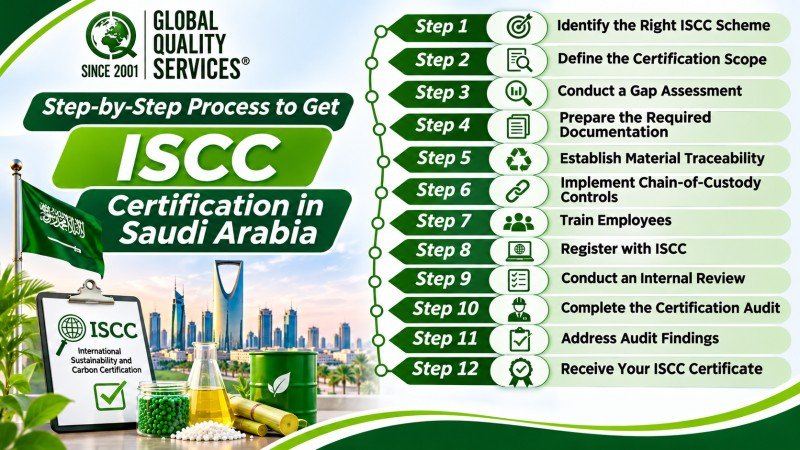
Getting ISCC certified requires preparation across your sourcing, production, storage, and record-keeping activities. The exact requirements depend on your selected scheme and the role your company performs in the supply chain.
Follow these steps to prepare for certification.
Step 1: Identify the Right ISCC Scheme
Start by reviewing your products, raw materials, business activities, and target markets. Decide whether ISCC EU, ISCC PLUS, ISCC CORSIA, or another applicable scheme matches your operations.
Step 2: Define the Certification Scope
Identify the legal entity, operational sites, activities, materials, and supply chain processes that fall within the certification scope. A clear scope helps your team understand which requirements apply.
Step 3: Conduct a Gap Assessment
Review your existing procedures, supplier records, material tracking, sustainability data, and operational controls. Compare your current practices with the selected ISCC scheme requirements and identify missing areas.
Step 4: Prepare the Required Documentation
Develop or update the records required for your activities. These may include supplier information, purchase records, sustainability declarations, delivery documents, mass balance records, greenhouse gas calculations, and internal procedures.
Step 5: Establish Material Traceability
Create a clear process to track eligible materials from incoming supplies to outgoing products. Maintain accurate records of quantities, suppliers, material categories, storage, processing, and transfers.
Step 6: Implement Chain-of-Custody Controls
Apply the chain-of-custody method permitted under your selected scheme and business activities. Depending on the applicable requirements, this may involve mass balance, physical segregation, or controlled blending.
Step 7: Train Employees
Explain the relevant ISCC requirements to employees who handle purchasing, production, storage, logistics, documentation, and sustainability reporting. Make sure they understand their responsibilities and maintain the required records.
Step 8: Register with ISCC
Select an ISCC-recognised certification body and sign the required certification agreement. Then complete your registration through the ISCC HUB. The registration must receive the required approvals before the certification audit.
Step 9: Conduct an Internal Review
Check your documents, material records, procedures, and operational controls before the external audit. Address gaps and prepare the relevant evidence for the certification auditor.
Step 10: Complete the Certification Audit
The selected independent certification body conducts the audit. Auditors review your documentation, records, processes, and relevant operational sites against the applicable ISCC requirements.
Step 11: Address Audit Findings
If the auditor identifies non-conformities, your company must take corrective action within the applicable deadline. Submit evidence to the certification body for review.
Step 12: Receive Your ISCC Certificate
After successful completion of the audit and closure of applicable findings, the certification body issues the ISCC certificate. Your company must continue following the scheme requirements and maintain its records.
Benefits of ISCC Certification for Businesses in Saudi Arabia
ISCC Certification can support businesses that want to demonstrate responsible sourcing and improve supply chain transparency. Its value depends on the selected scheme, the company’s activities, and customer or market requirements.
Key benefits include:
- Better Material Traceability: Track eligible materials across sourcing, processing, storage, and distribution activities.
- Stronger Supplier Oversight: Maintain supplier records and check whether incoming materials meet applicable sustainability requirements.
- Clearer Sustainability Claims: Use verified certification information to support accurate claims about eligible materials and products.
- Improved Customer Confidence: Give customers and business partners independent evidence of compliance with the selected ISCC scheme.
- Support for Circular Production: ISCC PLUS can support businesses working with recycled, circular, renewable, and bio-based feedstocks.
- Better Data Management: Maintain organised records of material quantities, sustainability characteristics, and relevant greenhouse gas information.
- Market-Relevant Recognition: Demonstrate compliance with applicable ISCC requirements when customers or target markets request it.
Why Choose Global Quality Services for ISCC Certification in Saudi Arabia?
Preparing for ISCC Certification involves more than collecting documents. Your company must understand the correct scheme, identify applicable requirements, maintain material records, and demonstrate traceability during the audit.
Global Quality Services supports businesses throughout this preparation process. Our team works with you to understand your operations and identify the areas that need attention before the certification audit.
Here is how we can support your certification journey:
- Scheme Selection Guidance: We help you understand the differences between ISCC schemes and identify the option relevant to your business activities.
- Gap Assessment Support: We review your existing practices and identify areas that need improvement.
- Documentation Assistance: We support the preparation and review of relevant procedures, records, and sustainability documents.
- Traceability Guidance: We help your team understand material tracking, chain-of-custody controls, and record-keeping requirements.
- Audit Preparation: We help you organise evidence, review documentation, and prepare employees for the independent audit.
- Corrective Action Support: We guide your team in addressing identified gaps and preparing relevant corrective action evidence.
Global Quality Services acts as your consulting partner. An ISCC-recognised independent certification body conducts the certification audit and makes the certification decision.
Speak with Global Quality Services for ISCC Certification in Saudi Arabia
Planning to obtain ISCC Certification for your business in Saudi Arabia? Global Quality Services can guide you through scheme selection, gap assessment, documentation, and audit preparation. Our consultants will help you understand the requirements that apply to your operations and address gaps before the independent audit. Contact Global Quality Services to discuss your certification goals and plan your next steps.
Frequently Asked Questions
1. Can a company in Saudi Arabia apply for ISCC Certification?
Yes. Companies in Saudi Arabia can apply through an ISCC-recognised certification body. The applicable scheme depends on their materials, business activities, and target markets.
2. Which ISCC scheme is suitable for plastic manufacturers?
Plastic manufacturers using recycled, circular, renewable, or bio-based feedstocks may consider ISCC PLUS. The final choice depends on the materials, processes, and intended sustainability claims.
3. Does ISCC Certification cover the entire supply chain?
ISCC requirements apply to relevant supply chain operators and activities within the certification scope. Each participating operator must meet the applicable requirements for its role.
4. What is the difference between ISCC EU and ISCC PLUS?
ISCC EU supports compliance with EU renewable energy sustainability requirements. ISCC PLUS supports voluntary sustainability certification for bio-based, circular, and renewable materials across global markets.
5. How long does an ISCC certificate remain valid?
ISCC certificates generally remain valid for 12 months. Certified companies must complete the required annual audit to maintain certification without a gap.