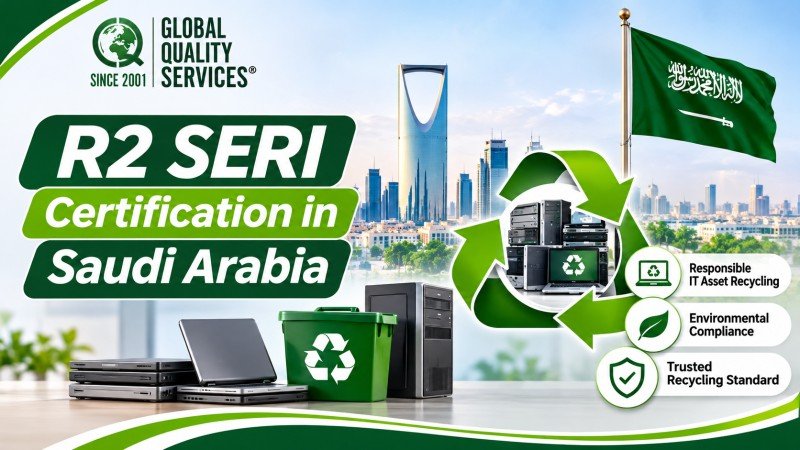
Electronic waste management is gaining attention across Saudi Arabia as businesses replace outdated IT equipment. According to the Communications, Space and Technology Commission, Saudi Arabia’s Recycle Your Device initiative recycled or repaired more than 960 tonnes of electronic devices by the end of 2025.
R2 SERI Certification in Saudi Arabia helps electronics recyclers follow responsible recycling, data security, and environmental practices. A consultant can help your business understand R2v3 requirements, prepare documentation, address compliance gaps, and approach the certification audit with confidence.
What is R2 SERI Certification
R2 SERI Certification refers to certification against the Responsible Recycling (R2) Standard, developed and managed by SERI (Sustainable Electronics Recycling International).
The R2 Standard sets requirements for businesses that collect, repair, refurbish, recycle, and recover materials from used electronic equipment. It helps companies manage electronic products responsibly throughout their processing activities.
The standard addresses several important areas:
- Environmental protection: Controls hazardous materials and prevents improper disposal of electronic waste.
- Worker health and safety: Establishes safe working conditions for employees handling electronic equipment.
- Data security: Controls sensitive information stored on computers, servers, phones, and storage devices.
- Material recovery: Promotes responsible reuse, refurbishment, and recycling of electronic components.
- Downstream vendor management: Requires businesses to evaluate and monitor their recycling partners.
- Legal compliance: Helps companies identify and meet applicable environmental and operational regulations.
R2 certification follows the R2v3 Standard. Businesses must meet the applicable core requirements and relevant process requirements based on their activities.
Why is R2 SERI Certification Important in Saudi Arabia?
Saudi Arabia’s electronics recycling sector needs responsible practices as businesses replace outdated IT equipment and electronic devices. Companies handling this waste must manage environmental, operational, and information security risks.
Here is why R2 SERI Certification matters for businesses operating in Saudi Arabia.
1. Supports Responsible E-Waste Management
Electronic waste contains materials that require careful handling. R2 certification helps recyclers establish procedures for sorting, processing, recovering, and disposing of electronic materials responsibly.
2. Protects Sensitive Business Information
Used computers, laptops, servers, and mobile phones may contain confidential information. The standard addresses data security and requires appropriate controls during equipment processing and data destruction.
3. Builds Trust with International Clients
International manufacturers, IT companies, and corporate buyers often assess recycling partners before entering business agreements. R2 certification demonstrates your commitment to responsible electronics recycling.
4. Improves Environmental Performance
R2 requirements encourage businesses to prioritise reuse, refurbishment, and material recovery. These practices help reduce unnecessary waste and support more responsible resource management.
5. Strengthens Supplier and Vendor Control
Recyclers often work with third-party processors and downstream vendors. R2 certification requires businesses to evaluate these partners and oversee their activities.
6. Creates New Business Opportunities
Many organisations prefer certified electronics recycling partners. R2 certification can help your company compete for contracts involving IT asset disposal, electronics refurbishment, and e-waste recycling.
Step-by-Step Process to Get R2 SERI Certification in Saudi Arabia
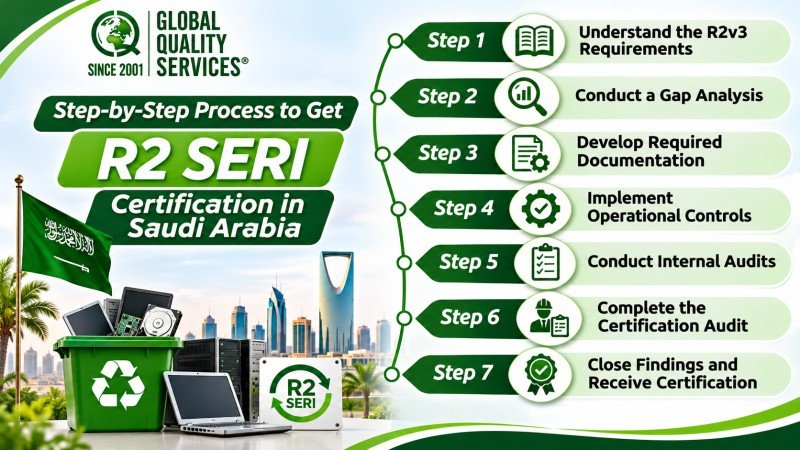
Getting R2 SERI Certification requires proper planning, documented procedures, and operational controls. Your company must demonstrate that it follows the applicable R2v3 requirements during daily operations.
Here are the main steps involved.
Step 1: Understand the R2v3 Requirements
Start by reviewing the R2v3 Standard and identifying the requirements that apply to your business. Consider your recycling activities, data destruction services, refurbishment operations, and material recovery processes.
Step 2: Conduct a Gap Analysis
Review your existing recycling practices against R2 requirements. Identify gaps in environmental controls, worker safety, data security, material tracking, and supplier management. Prepare an action plan to address these gaps.
Step 3: Develop Required Documentation
Prepare documented procedures for equipment handling, data sanitisation, hazardous material management, employee safety, and downstream vendor evaluation. Also, establish the required Environmental, Health and Safety (EHS) management system.
Step 4: Implement Operational Controls
Put the documented procedures into practice across your facility. Train employees, monitor recycling activities, maintain equipment records, and establish controls for handling electronic waste and sensitive information.
Step 5: Conduct Internal Audits
Review your implemented systems through internal audits. Check whether employees follow the procedures and maintain proper records. Identify nonconformities and complete corrective actions before the external certification audit.
Step 6: Complete the Certification Audit
Engage a SERI-approved certification body to conduct the certification audit. The auditor generally conducts two stages. Stage 1 reviews your documentation, while Stage 2 evaluates actual operations and implementation.
Step 7: Close Findings and Receive Certification
Address any nonconformities identified during the audit. Once your facility meets the applicable requirements, the certification body can issue your R2 certificate and recognise your certified facility.
Benefits of R2 SERI Certification in Saudi Arabia
R2 certification offers several operational and commercial advantages to electronics recycling and IT asset management businesses.
1. Improves Your Market Credibility
An R2 certificate demonstrates your commitment to responsible electronics recycling. It helps customers understand your capabilities and builds confidence in your business practices.
2. Strengthens Data Security Practices
R2 requirements address secure data handling and sanitisation. These practices help protect confidential information during equipment collection, processing, refurbishment, and disposal.
3. Supports Environmental Responsibility
The standard encourages businesses to prioritise reuse, refurbishment, and material recovery. This approach helps reduce unnecessary disposal and supports responsible resource management.
4. Improves Operational Efficiency
Documented procedures help employees follow consistent processes. Better equipment tracking, material handling, and supplier monitoring can also improve daily operations.
5. Helps You Reach International Markets
Many international organisations prefer responsible recycling partners. R2 certification can strengthen your position when approaching global customers, technology companies, and equipment manufacturers.
6. Strengthens Supply Chain Management
R2 requirements help businesses evaluate downstream vendors and monitor material movement. This gives customers greater confidence in how their electronic equipment moves through the recycling chain.
Why Choose Global Quality Services for R2 SERI Certification in Saudi Arabia
Preparing for R2 certification can become challenging when your business handles different electronic products, recycling activities, and downstream vendors. Global Quality Services helps businesses understand these requirements and organise their certification preparation.
Here is how GQS can support your certification journey:
- Gap Analysis: We review your existing processes and identify areas that need improvement.
- Documentation Support: Our team helps prepare the policies, procedures, and records required for R2v3 compliance.
- Implementation Guidance: We guide your employees through the operational changes needed to meet applicable requirements.
- Employee Training: We help your team understand its responsibilities and follow the required procedures.
- Audit Preparation: We help you review documentation, address gaps, and prepare for the certification audit.
- Ongoing Support: We guide your business in maintaining compliance and preparing for subsequent audits.
Whether you operate an electronics recycling facility, ITAD company, refurbishment centre, or material recovery business, GQS can help you prepare for R2 SERI Certification in Saudi Arabia.
Speak with Global Quality Services for R2 SERI Certification in Saudi Arabia
Looking to achieve R2 SERI Certification in Saudi Arabia? Partner with Global Quality Services for expert guidance throughout your certification journey. Our team helps you understand R2v3 requirements, prepare essential documentation, address compliance gaps, and get ready for the certification audit. Contact Global Quality Services today to discuss your business requirements and take the next step towards responsible electronics recycling.
Frequently Asked Questions
1. Which businesses can apply for R2 SERI Certification in Saudi Arabia?
Electronics recyclers, ITAD companies, refurbishment centres, repair facilities, and businesses involved in electronic material recovery can apply if they meet the applicable R2 requirements.
2. Is ISO 14001 mandatory for R2 SERI Certification?
R2 requires an approved Environmental, Health and Safety management system. ISO 14001 may address the environmental component, but it does not independently fulfil the complete EHS requirement.
3. Does R2 certification cover data destruction activities?
Yes. R2v3 includes Appendix B for data sanitisation activities. Facilities performing these activities must meet the applicable requirements and demonstrate secure data handling practices.
4. Can a company outsource certain electronic waste recycling activities?
Yes. A facility can use qualified downstream vendors for specialised processing. However, it must evaluate, approve, and monitor these vendors according to applicable R2 requirements.
5. How often does a business need to renew R2 SERI Certification?
R2 certification follows a three-year certification cycle. Facilities undergo surveillance audits during the cycle and a recertification audit to continue their certification.