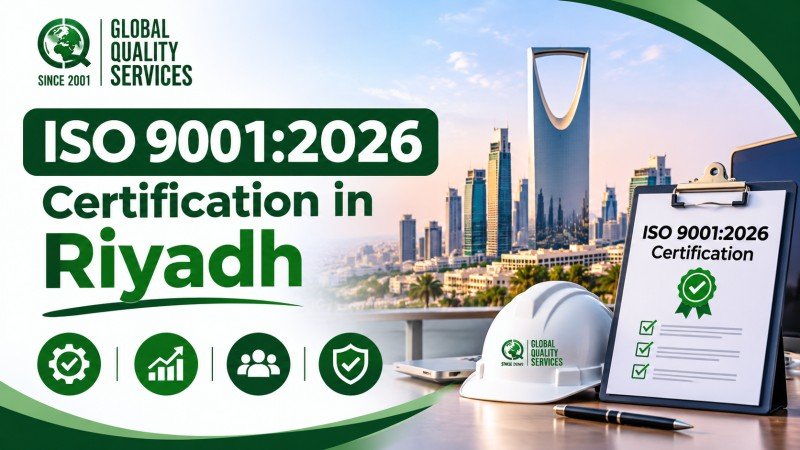
Businesses in Riyadh need consistent quality to compete and win customer trust. Saudi Arabia’s real GDP grew by 3% in Q1 2026, according to the General Authority for Statistics (GASTAT). This growth highlights the country’s expanding business opportunities.
ISO 9001:2026 helps organizations improve quality management, control processes, and meet customer expectations. However, understanding the revised requirements and preparing for certification can take time. Hiring an experienced ISO consultant helps your business manage implementation, update documentation, and prepare for certification audits.
What is ISO 9001:2026 Certification?
ISO 9001:2026 is the latest international standard for Quality Management Systems (QMS). It helps businesses manage their processes, improve product and service quality, and meet customer expectations. The International Organization for Standardization (ISO) published this revised edition on 16 September 2026.
The updated standard builds on ISO 9001:2015 but introduces clearer requirements for leadership, quality culture, ethical behaviour, risks, and opportunities. It also encourages businesses to connect quality objectives with their overall business strategies.
Companies in Riyadh can use ISO 9001:2026 to improve operational performance and build stronger customer relationships. The standard applies to businesses of every size and industry, including construction, manufacturing, healthcare, logistics, IT, and professional services.
Organizations can implement the requirements internally or seek independent certification. An accredited certification body assesses the Quality Management System and issues the certificate after successful audits.
Why is ISO 9001:2026 Certification Important for Businesses in Riyadh?
Riyadh has a growing business environment with opportunities across construction, manufacturing, technology, healthcare, and logistics. Companies must maintain consistent quality to meet customer expectations and compete for business opportunities.
ISO 9001:2026 gives organizations a structured approach to managing quality. It helps management teams review existing processes, identify weaknesses, and improve daily operations.
Here is why businesses in Riyadh should consider this certification:
1. Meet Customer Expectations
Customers expect businesses to deliver reliable products and services. ISO 9001:2026 helps companies understand customer requirements, monitor satisfaction, and address complaints effectively.
2. Improve Operational Efficiency
Unclear procedures and inconsistent processes can affect business performance. The standard encourages organizations to review workflows, reduce errors, and improve resource utilization.
3. Strengthen Leadership Involvement
The revised standard places greater emphasis on leadership, quality culture, and ethical behaviour. It encourages senior management to take an active role in quality improvement.
4. Manage Risks and Opportunities
Businesses face operational, supply chain, and customer-related challenges. ISO 9001:2026 helps organizations assess risks and identify opportunities that support better business decisions.
5. Build Market Credibility
An ISO 9001:2026 certificate demonstrates that an independent certification body has assessed your Quality Management System. This can strengthen confidence among customers, suppliers, and business partners.
6. Support Business Growth
A well-managed QMS helps businesses maintain consistent performance as they expand. It also supports organizations that want to work with larger clients and enter new markets.
Step-by-Step Process to Get ISO 9001:2026 Certification in Riyadh
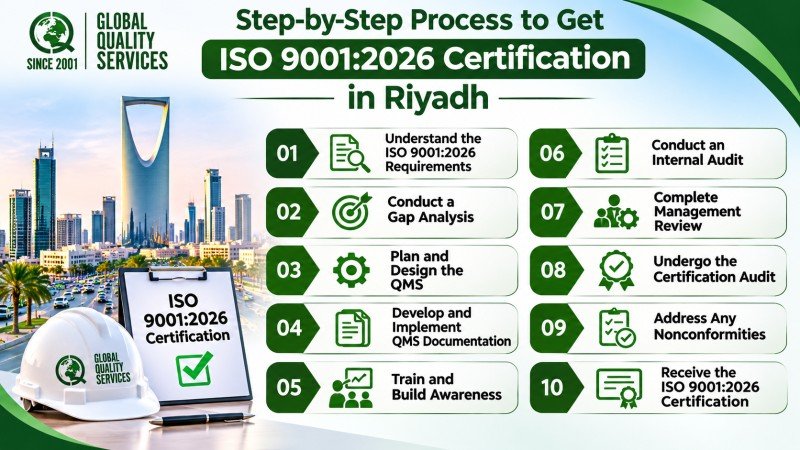
Getting ISO 9001:2026 certified requires proper planning, employee involvement, and regular performance reviews. Businesses should understand the standard before changing their existing quality processes.
Here are the key steps to follow:
Step 1: Understand the ISO 9001:2026 Requirements
Start by reviewing the latest ISO 9001:2026 requirements. Understand the changes related to leadership, quality culture, ethical behaviour, risks, opportunities, and organizational context. Identify how these requirements apply to your business activities.
Step 2: Conduct a Gap Analysis
Review your existing Quality Management System and compare it with the revised standard. Identify missing procedures, outdated documents, process weaknesses, and areas that need improvement. A gap analysis helps your team prepare a practical implementation plan.
Step 3: Define the QMS Scope and Quality Objectives
Determine which business activities, departments, and locations your QMS will cover. Set measurable quality objectives that support your business goals. Make sure your management team understands its responsibilities and actively supports the implementation process.
Step 4: Develop and Update QMS Documentation
Prepare or revise the documents needed to manage your quality processes. These may include the quality policy, process procedures, risk assessments, work instructions, and performance records. Keep the documentation relevant to your actual business operations.
Step 5: Train Employees and Build Quality Awareness
Train employees on the updated QMS requirements and their responsibilities. Explain how their daily activities affect product and service quality. Encourage managers and team leaders to promote quality awareness and ethical behaviour across departments.
Step 6: Implement the Quality Management System
Put the updated procedures into practice across your organization. Monitor daily activities, maintain records, and review process performance. Involve employees from different departments to identify problems and suggest practical improvements.
Step 7: Conduct an Internal Audit
Arrange an internal audit to check whether your QMS meets ISO 9001:2026 requirements. Review processes, interview employees, and examine relevant records. Document any nonconformities and assign corrective actions to the responsible teams.
Step 8: Conduct a Management Review
Senior management should review the QMS’s effectiveness. Discuss audit findings, customer feedback, quality objectives, process performance, risks, and improvement opportunities. Record decisions and assign responsibilities for pending actions.
Step 9: Complete the Certification Audit
Select an accredited certification body to conduct the external audit. The certification process generally involves two stages:
- Stage 1 Audit: The auditor reviews your QMS documentation, scope, and overall readiness for certification.
- Stage 2 Audit: The auditor checks how effectively your organization implements the requirements in actual business operations.
Step 10: Receive Your ISO 9001:2026 Certificate
After successful completion of the certification audit and closure of applicable findings, the certification body makes its certification decision. Once approved, your organization receives its ISO 9001:2026 certificate.
What are the Benefits of ISO 9001:2026 Certification?
ISO 9001:2026 certification offers practical advantages beyond meeting international quality requirements. It helps businesses improve internal operations and build stronger relationships with customers and stakeholders.
Some important benefits include:
1. Better Quality Control
The standard helps organizations monitor their processes and identify quality problems early. Businesses can take corrective action before issues affect customers.
2. Higher Customer Satisfaction
Understanding customer needs helps companies deliver products and services that meet agreed expectations. Regular feedback also helps businesses identify areas for improvement.
3. Improved Employee Accountability
Clear responsibilities help employees understand their roles. The updated emphasis on quality culture encourages everyone to contribute to better business performance.
4. Reduced Operational Errors
Consistent procedures help businesses avoid repeated mistakes and unnecessary rework. Organizations can also identify process weaknesses and improve their daily operations.
5. Stronger Business Reputation
ISO 9001:2026 certification demonstrates your commitment to quality management. It can help businesses build confidence among customers, suppliers, and potential business partners.
6. Better Management Decisions
Performance data, internal audits, and management reviews give leaders useful information. They can use these findings to set priorities and make informed decisions.
7. Support for International Business Opportunities
Many customers and business partners consider quality management certification when evaluating suppliers. ISO 9001:2026 can strengthen your company’s position when pursuing new contracts and business relationships.
Why Choose Global Quality Services for ISO 9001:2026 Certification in Riyadh?
Preparing for ISO 9001:2026 certification requires a clear understanding of the revised requirements and your organization’s existing processes. Global Quality Services (GQS) helps businesses approach this process with structured consulting and documentation support.
We work with your team to understand its quality management needs and identify areas that require attention. Our consultants can assist with gap analysis, QMS documentation, employee awareness training, internal audit preparation, and certification audit coordination.
Whether you are implementing ISO 9001 for the first time or transitioning from the 2015 edition, GQS can guide your team through the necessary steps.
Our consulting support focuses on practical improvements rather than unnecessary paperwork. We help you develop a QMS that reflects your actual business activities and supports long-term quality objectives. With GQS, your business can approach ISO 9001:2026 certification with better preparation and a clear implementation plan.
Speak with Global Quality Services for ISO 9001:2026 Certification in Riyadh
Planning to achieve ISO 9001:2026 Certification in Riyadh? Partner with Global Quality Services for professional consulting and implementation support. Our team can help you understand the revised requirements, conduct a gap analysis, prepare QMS documentation, and coordinate certification audit activities. Contact Global Quality Services today to discuss your certification goals and take the next step towards stronger quality management.
Frequently Asked Questions
1. Can a company include multiple branches under one ISO 9001:2026 certificate?
Yes, a company can include multiple locations under one certificate if they fall within the approved QMS scope and meet applicable multi-site certification requirements.
2. How should businesses handle outsourced processes under ISO 9001:2026?
Businesses must identify outsourced processes, define supplier controls, monitor performance, and maintain accountability for the quality of externally provided products and services.
3. Does ISO 9001:2026 require businesses to maintain customer satisfaction records?
Organizations should monitor customer perceptions through suitable methods, such as surveys, complaints, feedback, repeat business, and customer performance reviews.
4. Can a company integrate ISO 9001:2026 with ISO 14001 or ISO 45001?
Yes, businesses can integrate these standards through shared management processes, internal audits, documented information, risk assessments, and management reviews.
5. What happens if an auditor identifies a major nonconformity during certification?
The certification body will require corrective action and suitable evidence. It will review the response before making its certification decision.