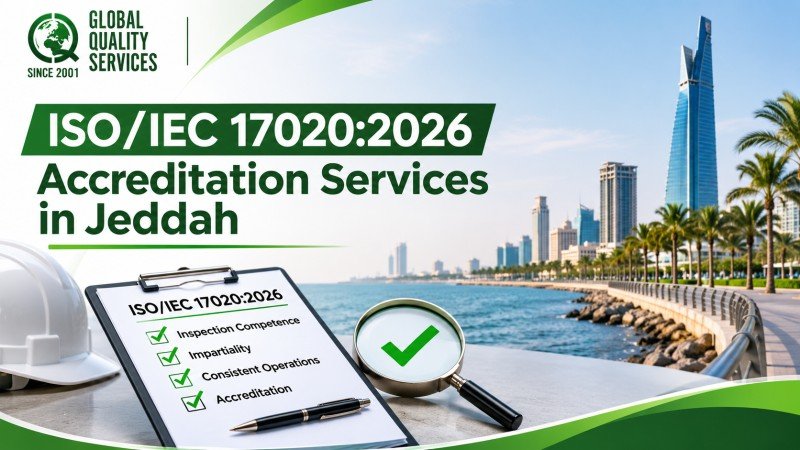
Why Do Inspection Bodies in Jeddah Need ISO/IEC 17020:2026 Accreditation?
Jeddah has an active industrial and commercial environment. Businesses across manufacturing, logistics, construction, and engineering depend on inspection services to assess quality, safety, and compliance. Inspection bodies must demonstrate that their findings come from competent personnel and reliable methods.
ISO/IEC 17020:2026 gives inspection organisations a recognised reference for managing these responsibilities. Accreditation can help your business:
- Demonstrate technical competence to clients and business partners.
- Strengthen confidence in inspection findings and reports.
- Maintain impartiality throughout inspection activities.
- Improve consistency across inspection procedures.
- Identify weaknesses in existing inspection practices.
- Build stronger opportunities in competitive markets.
What Does ISO/IEC 17020:2026 Cover?
ISO/IEC 17020:2026 addresses the competence, impartiality, and consistent operation of inspection bodies. It applies to organisations that perform inspections across different technical and industrial sectors.
The standard covers important operational areas, including:
- Organisational structure: Define responsibilities, reporting relationships, and authority within inspection operations.
- Impartiality: Identify relationships or commercial interests that could influence inspection decisions.
- Personnel competence: Establish suitable qualifications, training, experience, and technical knowledge for inspectors.
- Inspection methods: Select appropriate methods and maintain reliable inspection procedures.
- Equipment management: Keep inspection equipment suitable, maintained, and properly calibrated where required.
- Management system: Maintain documented procedures, records, internal audits, and management reviews.
These areas help inspection bodies maintain control over their daily activities and deliver dependable results.
Step-by-Step Process to Get ISO/IEC 17020:2026 Accreditation
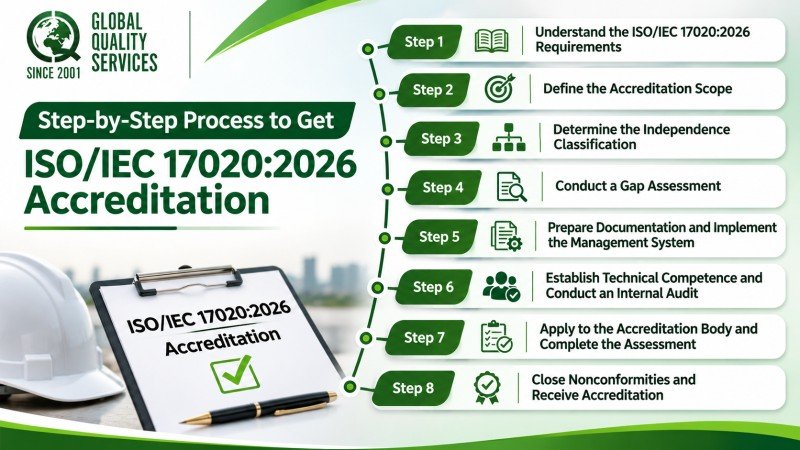
Follow these eight key steps to prepare your inspection body, meet accreditation requirements, and demonstrate technical competence to the accreditation body.
Step 1: Understand the ISO/IEC 17020:2026 Requirements
Review the standard and understand its requirements for inspection competence, impartiality, confidentiality, and consistent operations. Identify how these requirements apply to your inspection activities.
Step 2: Define the Accreditation Scope
Identify the inspection services your organisation wants to include in its accreditation. Specify the products, equipment, processes, or installations your team will inspect.
Step 3: Determine the Independence Classification
Evaluate your organisational structure and business relationships. Identify the applicable inspection body classification based on its independence and impartiality arrangements.
Step 4: Conduct a Gap Assessment
Compare your existing inspection practices with the standard’s requirements. Identify weaknesses in documentation, personnel competence, equipment management, and inspection procedures.
Step 5: Prepare Documentation and Implement the Management System
Develop the required policies, procedures, and inspection records. Assign responsibilities, establish operational controls, and implement the management system across your inspection activities.
Step 6: Establish Technical Competence and Conduct an Internal Audit
Verify personnel qualifications, training, experience, equipment suitability, and inspection methods. Conduct an internal audit to identify nonconformities and address operational gaps.
Step 7: Apply to the Accreditation Body and Complete the Assessment
Submit your application with the proposed accreditation scope and supporting documents. Cooperate with assessors during document reviews, staff interviews, and witnessed inspections.
Step 8: Close Nonconformities and Receive Accreditation
Address assessment findings through corrective actions and submit supporting evidence. Once the accreditation body completes its evaluation and approves your application, it grants accreditation for the approved scope.
How Global Quality Services Supports ISO/IEC 17020:2026 Accreditation in Jeddah
Preparing for accreditation can involve several technical and management-related activities. Global Quality Services helps inspection bodies understand the applicable requirements and organise their preparation work.
Our consultants review your existing inspection practices, identify documentation gaps, and recommend practical improvements. We also assist with management system documentation, personnel competence requirements, inspection procedures, and internal audit preparation.
From the initial gap assessment to the final accreditation assessment, our team guides your organisation through the preparation process. We help you address identified weaknesses and prepare the necessary evidence for the accreditation body.
Start Your ISO/IEC 17020:2026 Accreditation Journey in Jeddah
Planning to achieve ISO/IEC 17020:2026 Accreditation for your inspection body? Partner with Global Quality Services for professional consulting support. Our team can help you understand the requirements, organise your documentation, and prepare your inspection operations for assessment. Contact Global Quality Services today to discuss your accreditation goals and take the next step towards demonstrating your inspection body’s competence.
Frequently Asked Questions
1. Can an inspection body apply for ISO/IEC 17020:2026 Accreditation with limited operating experience?
Yes, an organisation can apply if it meets the accreditation body’s eligibility requirements and demonstrates competent personnel, suitable procedures, and reliable inspection operations.
2. Does ISO/IEC 17020:2026 cover third-party inspection activities?
Yes, the standard covers inspection bodies with different independence arrangements. The applicable classification depends on organisational relationships and the inspection body’s independence.
3. How does ISO/IEC 17020:2026 address conflicts of interest?
The standard strengthens impartiality requirements. Inspection bodies must identify commercial or organisational relationships that could influence inspection decisions and take appropriate action.
4. Can an inspection body extend its accreditation scope later?
Yes, an accredited inspection body can apply for scope extension. The accreditation body reviews the additional activities, technical competence, resources, and supporting evidence before approval.
5. What happens if an inspection body fails its accreditation assessment?
The accreditation body reports identified nonconformities. The inspection body must investigate their causes, implement corrective actions, and submit evidence for evaluation before the accreditation decision.